
How to Wash Pillows Without Ruining Their Shape
by
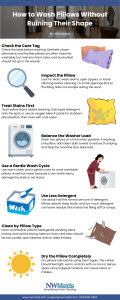
Okay, so the first thing you want to do is start by checking the label and the fill. You want to read the care tag super carefully to determine what material is inside the pillows, inside the shell, before you start any sort of wet cleaning process. Most synthetic, down alternative, and feather pillows can be washed in a machine. But if you have memory foam, latex, or buckwheat, those inserts cannot be washed in a machine. If there’s no tag, usually you want to default to a delicate treatment, so you should select the most gentle approach.
First, you want to inspect the pillow, verify that the material has no tears, that all the seams are secure, that the zippers are closed, and do any sort of stitching or taping work to make sure that nothing falls out of the pillow.
Pre-Clean for Stains and Yellowing
After that, you want to do a quick pre-clean for stains and yellowing. You know how sometimes a pillow has yellow stains, and, you know, hair products and things like that on it? That’s basically a combination of skin oils and dust, and that’s the most noticeable sort of stain that’s usually on a pillow. You want to do a spot treatment before you do the wash cycle with these pillows.
- Dab a small amount of liquid laundry detergent onto the discoloration and work it in with your fingers or a soft toothbrush.
- If it’s a stubborn stain, make a paste with oxygen bleach and warm water, and leave it on the stain for about 10 to 15 minutes.
- Rinse the treated area with cool water before you start the actual washing process.
Setting Up Your Washing Machine
After that, you want to empty the washer, and you want to make sure, first of all, that your laundry machine has enough space for the pillow to move around and make sure it’s balanced.
Pro Tip: Use two pillows and put them on different sides of the laundry machine, and like put them on opposite sides of the tub, because if you have only one pillow, it can actually unbalance the operation of the laundry machine.
If you only have one pillow you want to wash, take two or three clean bath towels and put them under the pillow, because that will reduce the thumping sounds from the laundry machine.
Select the largest load size that your laundry machine offers. If you have cramped space, it can trap soap residue, and that makes the pillow lumpy, which you don’t want.
Water and Cycle Settings
Next, you want to use warm water with a gentle cycle setting. That safeguards the seams and stops the filling materials from creating lumps. Warm water generally works best for polyester and down alternative pillows, because it removes oils while maintaining the natural structure of the fibers. If you have feather and down, you want to use cool to warm water depending on the tag, so check the tag on the pillow as well.
Avoid the hot settings because it can actually damage the shell, it can shrink the cotton, and it can actually make the stains permanent. So you want to avoid the hot water. As an additional optional step, you can perform a second rinse to prevent the detergent residue from staying inside the pillow.
Use Less Detergent
The other pro tip is that you want to use less detergent than you think you need, because the pillow actually absorbs the detergent material kind of like a sponge. Sometimes detergent can get trapped inside the stuffing of the pillow, and it can dry into a hard and brittle texture, which is not good. Measure about half the usual detergent that you usually use, and don’t use fabric softener, because it creates coatings on the fibers that decrease the kind of long-term fluffiness of your pillow. You can also add a small amount of white vinegar to the rinse cycle to eliminate the hard water residue inside the pillow, but not too much vinegar because that will create a smell.
Special Care for Different Pillow Types
Down and Feather Pillows
Down and feather pillows can turn into these flat sad shapes if you use the normal washing process on your laundry machine. But when you dry them, they’ll sort of regain their loft and fluffiness. Use a gentle cycle with a reduced amount of detergent and an additional rinse cycle afterwards. After you wash it, hold the pillow with both hands and support it, and make sure to drain it and dry it while it’s in a straight position. Inspect the seams again to make sure that they’re not broken, because if there’s seam separation, that can be very bad when you dry it. Fix any sort of feather leaks before you start the dryer cycle.
Memory Foam and Latex
With memory foam and latex materials, they can develop damage through tearing and crumbling when they stay underwater for long periods of time. You want to wash these items by hand. 1. Remove their covers before you start washing them. 2. Vacuum the foam using an upholstery attachment, you know how you have the vacuum cleaners with the attachment you can vacuum your couch, use that attachment to vacuum the foam. 3. Use a soap solution on a damp cloth to remove the specific stains. 4. Rinse the surface with water and make sure to eliminate all the soap residue. 5. Place the foam on a rack in a well-ventilated area with plenty of air circulation so that it can air dry.
Drying Your Pillows
The thing is about drying is that you want to make sure to avoid mildew and odors. Even though the outside of the pillow may feel dry, the center of it can actually still be wet.
Use a low to medium heat setting for synthetics and a low heat setting for downs and feathers. You can also add dryer balls or, for example, clean tennis balls to the drying machine in order to help the filling move around inside, and it stops the formation of clumps. After that, you want to fluff and reshape the pillow by hand and continue drying. Maybe dry it for 20 minutes, fluff it up again, then dry it again. At the end, you can see that it’s fully dry because it has a uniform state of warmth and lightness, and it feels dry inside, with no cool areas or dense areas in the pillow.
What if you don’t have a dryer?
Well, you’re going to have to air dry it, so you want to schedule extra time for drying your pillows in that case.
- Place the pillow on a clean drying rack. You should never rest it on carpet or any soft bed surface, because air needs to move freely inside the pillow.
- Flip the pillow about every hour while using gentle pressure to separate any clumps that form inside.
- If you have a fan, you can point that at the pillow while it’s drying, and that creates faster evaporation.
- Sunlight also provides a couple benefits here because it makes the fabric smell fresher and appear brighter, but some direct sunlight exposure can cause the shell patterns to fade. Place the fabric in partial shade if it contains bright colors.
Fluffing and Reshaping
Once it’s dry, you want to knead the pillow like dough, right, and give it a few firm shakes to spread the filling from corner to corner.
If you have a down pillow, you want to hold the pillow at the short ends and clamp it tightly to separate clusters. For synthetics, you want to extend the corners of the structure while shaping the exterior into an even, uniform form. If you still have lumps, toss the pillow into the dryer for 10 minutes on an air-only setting. This is important for making sure that it doesn’t damage the pillow, an air-only setting in the dryer with dryer balls, and then try fluffing it again.
Maintaining a Cleaning Schedule
How often should you wash your pillows? About 3 to 6 months is kind of a good schedule to keep. Wash your protectors and pillowcases more often than that. If you have pets, allergies, or oily hair, you should consider washing your pillows and pillowcases even more frequently.
You also want to rotate the pillows on the bed to avoid going to sleep with wet hair, which feeds odors. Using a zipper protector is the easiest way to keep the pillow itself cleaner in between washes.
Lastly, you want to remove the pillowcases, the protectors, and any removable covers before starting the pillow cleaning process. Wash these items at warm temperatures when the fabric permits, obviously check the tag on the fabric, because these layers actually contain the majority of the body oils and the sweat that accumulates on a pillow. Dry them completely after washing them, and then put everything back on after the pillow has dried and cooled out.
If you need any help with any sort of cleaning tasks, you can contact us at NW Maids, nwmaids.com, and we’d be happy to help you.
You are one click away from a beautiful home!
Join our mailing list!
Book a Cleaning in 60 Seconds