
A crowded workspace turns simple work into a running list of unfinished tasks.
The fix does not require a full weekend or perfect energy.
A stress-free home office decluttering plan works when it stays small, has a clear finish line, and repeats with light daily habits.
Importance of Decluttering a Home Office
Clear space supports clear work
Visual clutter competes with your attention. Your brain keeps tracking what it can see, including paper stacks, cables, and extra supplies.
When you declutter a home office and clear surfaces, you reduce constant prompts so you can focus on one task without interruptions.
Less clutter lowers daily friction
Small messes create repeated delays. You search for a pen, a charger, and a file, then lose momentum.
You rebuild a “temporary” laptop area, then repeat the shuffle the next day. A lighter setup helps you reach what you use most while cutting down on daily resets.
A tidy office protects focus and time
Good home office organization supports better planning. You can see what needs attention, what can wait, and what can be removed from your day.
Clear zones also make it easier to stop working at a reasonable time because the room stops adding pressure.
How to Declutter a Home Office Without Stress
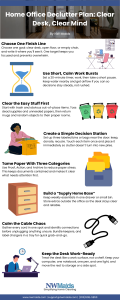
Pick a finish line before you touch a thing
Choose one objective for this session: a clear desk, an open floor, or an empty chair. Write the goal as one sentence and place it where you can see it.
This simple step helps you declutter your workspace without getting overwhelmed because it prevents you from bouncing between storage areas.
Set a timer and stay comfortable
Work in short bursts, then pause. A twenty-minute timer is long enough to make progress while staying calm.
Keep water nearby and open a window if you can.
Comfort matters because tension speeds up decisions, and rushed decisions lead to clutter moving from one pile to another.
Start by removing trash and obvious out-of-place items
Begin with the easiest wins.
Throw away packaging, dried markers, broken pens, and papers you already scanned and no longer need.
Return mugs, dishes, and random objects to their proper rooms. This first pass creates quick space, which makes the next choices feel lighter.
Create a decision station: keep, donate, recycle
Place three bags or bins near the door and label them.
- The keep bag is for items you use and want to store properly.
- The donate bag is for items someone else can use.
- The recycle bin is for materials that should go back into circulation.
- Touch each item once, then place it in the correct spot or return it to its home.
Use a simple paper clutter system: Proof, Action, Archive
Paper is often the source of stress, mainly because each page seems to demand a decision. Skip that pressure by sorting first. Create three folders on your computer:
-
Proof (tax items, warranties, contracts)
-
Action (forms to sign, bills to pay, notes to answer)
-
Archive (reference material you might need later)
This home office paper clutter system keeps paperwork from spreading while you stay in control of what needs attention.
Build a basic supply zone
Designate one drawer or small bin for essentials: pens, a notepad, tape, clips, and a backup charger. Keep only what you use each week.
Store extras in a backup box outside the office. Your desk stops acting like storage when supplies live in one reliable place.
Organize cables, chargers, and small tech
Cable piles add visual noise and slow you down. Gather every cord in the room and place them in one spot.
Identify what each cable connects to before unplugging anything you are unsure about. Use ties or Velcro straps for the keepers.
Place chargers in a tray and label them so you do not have to guess later. Simple cable management for a home office makes the room feel calmer fast.
Keep only essential items on the desk
A desk should function as a work surface, not a display shelf. Keep your computer, one notebook, one pen, and one light source.
Move décor to a shelf. Put the printer on a side table and use it only when needed. The fewer items on the desk, the faster you can start work without a prep routine.
Give the chair and floor a job
A chair is for sitting, not for storing laundry and mail. The floor should stay open so you can move your chair and keep space between you and stacked objects.
Clear these two areas early, then protect them. The entire room feels different when the chair and floor stay empty.
Declutter the digital workspace at the same pace
Physical clutter and digital clutter often grow together. Create three folders on your computer:
-
Active
-
Waiting
-
Filed
Move downloads into one of these folders at the end of the day.
Close browser tabs you do not need. Rename files with dates and clear titles so you can find them later.
A steady digital declutter for your home office prevents the same overwhelm from returning on your screen.
Set storage rules that stop new piles
A room stays organized when items return to the same spot every time.
- Give mail a tray.
- Give receipts an envelope.
- Give notebooks a vertical file.
- Place the container exactly where the pile tends to form.
- Add labels so your hands can put things away without thought.
This is the difference between “clean once” and home office organization that lasts.
Maintain the habit with a five-minute closing routine
Before you leave the room, reset the basics.
Return papers to folders, put supplies back in the drawer, and clear the floor.
At the start of the next day, wipe the desk and begin. A 5-minute desk reset keeps the space functional because you are not undoing yesterday’s clutter.
Know when to hand off the heavy lifting
A home office affects more than one room because dust and storage creep outward.
If you want to focus on decisions and setup, get help restoring the clean baseline. If you are looking for a housecleaning service, consider NW Maids.

Conclusion
Your office can feel light again
If you want to know how to declutter a home office without stress, keep the method simple. Choose one finish line, remove what does not belong, and give the remaining items a clear home.
Protect the chair and floor, manage paper with a basic system, and reset the space with a short daily close. The goal is a workspace that supports focus instead of creating pressure.
Related Posts:
- Should You Keep a Toilet Plunger Out in the Bathroom?
- How to Request Eco-Friendly Options from Your Cleaning Service
- How to Maintain Trust With Regular Cleaning Staff
- What to Do When Your Cleaner Misses a Spot
