
How to Clean Your Coffee Maker (Including Descaling)
by
So, you’re enjoying your daily coffee, but your Keurig is actually also accumulating oils, mineral deposits, and loose coffee grounds in hidden areas. This short brewing process enables flavor consistency because the brewer controls both the temperature and the flow rate during the brewing time, and that’s how you get better taste with Keurig.
But the oils in the coffee beans become stale, and hard water materials create these chalky substances that block the small water channels. You’ve probably seen this like white powder that accumulates, and the device continues to brew coffee but the brewing time becomes longer. It occasionally stops working because of the accumulated layers, and the waterline performance is basically the key there. You want to make sure that you’re on a scheduled maintenance cycle because it also protects the pumps and the valves and prevents it from breaking.
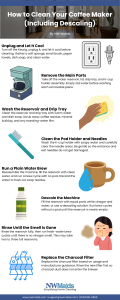
Step 1: Unplug and Disassemble
First, you want to unplug the Keurig machine, let it cool down, and you want to gather a soft sponge, a small brush or a toothbrush, paper towels, and clean water.
Essentially, you want to take it apart. Remove the water reservoir, the lid, the drip tray, and the K-cup holder assembly. Discard all the old water and start by washing the reservoir and the drip tray. You should use dish soap for this and make sure to clean any sort of mineral buildup as well.
Step 2: Clean the Pod Holder and Needles
Next, you want to clean the K-cup holder and the exit needle area. Wash both pieces with soapy water. You want to flush the entrance needle really carefully, to make sure that it doesn’t break.
Then you wipe the exterior and the touch points. Just use a small cloth with warm water and a little bit of soap is fine.
Reassemble and run a plain water brew. Put everything back in place, fill the reservoir with water, and then run it with no pod and place your mug on the drip tray. Discard the water, and you keep doing that. That helps to remove all the soap residue.
Step 3: Descaling the Machine
If there’s some mineral buildup in the reservoir, what you want to do is fill it with equal parts white vinegar and water. You can also just buy a descaling solution, but vinegar totally works fine.
Again, you start a brew without a pod and then pour out the hot liquid after each cycle. Basically, operate the machine until the reservoir reaches its lowest point before allowing it to rest for about 30 minutes. That lets the solution treat the entire heating path.
After that, you need to rinse out the descaling solution. The reservoir requires a complete water rinse before you can add new water. You have to run brew cycles with no pod until the reservoir empties. Repeat the process by adding fresh water to the container and doing it again and again until the vinegar smell disappears. This usually takes, I would say, two to three full cycles of running the reservoir with fresh water each time. You know it’s done when you can see the water coming out as clean without any remaining flecks of vinegar or any sort of minerals that were flushed out of the system during the descaling process.
Step 4: The Charcoal Filter
That’s basically what you need to do if you want to replace your charcoal filter system. You can check the guidelines as far as when you want to replace that because various types of filters have different lifespans. I think two months is generally where you want to replace it, but it also depends on how frequently you use the machine.
What you want to make sure when you’re replacing the filter is to rinse it so the charcoal dust doesn’t get into the brewer.
Recommended Maintenance Schedule
Basically, that’s how you clean your Keurig. Put everything back together, rinse it out, and when you’re storing it, make sure it’s super, super dry.
To keep it running great, follow this routine:
- Weekly: Clean the pod holder and the drip tray, and wash the reservoir maybe once a week or once every two weeks. Make sure there’s no standing water in there for multiple days at a time.
- Every 3 to 6 Months: Run the descaling process. Maybe more than three months if you use it all day, every day, right? If you’re just drinking like six cups of coffee a day, then yeah, you probably need to do it like every
You are one click away from a beautiful home!
Join our mailing list!
Book a Cleaning in 60 Seconds