
Research Highlights: The strongest handwashing data shows that soap, friction, running water, and enough scrubbing time work together to reduce germs and lower the spread of common infections.
- CDC recommends scrubbing hands for at least 20 seconds as part of its five-step handwashing method: wet, lather, scrub, rinse, and dry.
- Evidence suggests washing for about 15 to 30 seconds removes more germs than washing for shorter periods, although the CDC notes that the exact health impacts by duration are difficult to measure.
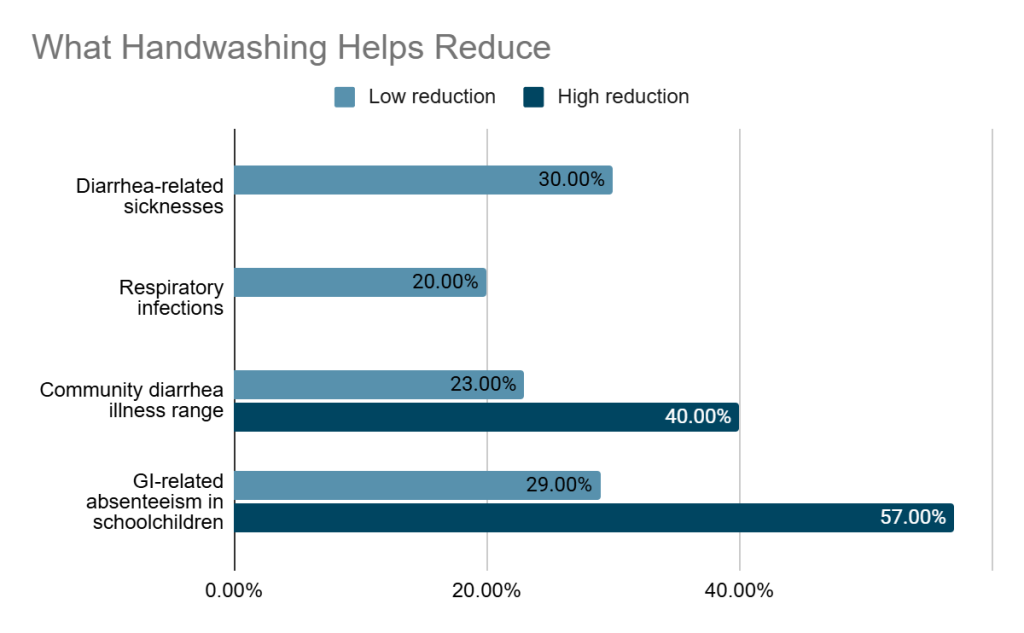
- Handwashing education can reduce diarrhea illness by 23% to 40% in community settings, according to the CDC’s summary of handwashing research.
- Handwashing can prevent about 30% of diarrhea-related sicknesses and about 20% of respiratory infections, according to the CDC.
- A WHO summary of randomized trials found a 31% reduction in diarrhea incidence among children in day-care centers and schools after handwashing promotion interventions.
- A single gram of human feces can contain one trillion germs, making bathroom-related handwashing one of the highest-value hygiene habits in the home.
- Soap is more effective than water alone because soap surfactants lift soil and microbes from skin, while rubbing creates friction that helps remove dirt, grease, and microbes.
- Water temperature does not appear to affect germ removal, so clean running water can be warm or cold.
- Hand sanitizer should contain at least 60% alcohol when soap and water are not available, but the CDC says soap and water are better for removing certain germs, dirt, grease, and some chemicals.
- FDA says there is not enough evidence that over-the-counter antibacterial soaps prevent illness better than plain soap and water, so the 20-second habit matters more than antibacterial marketing claims.
Why Do You Have to Wash Your Hands for 20 Seconds?
You should wash your hands for 20 seconds because soap, rubbing, rinsing, and drying need enough time to lift and remove germs, dirt, grease, and other material from the skin. CDC says scrubbing for at least 20 seconds removes more germs than shorter washing times.
The 20-second rule is not magic. It is a practical public health benchmark. CDC notes that determining the exact “optimal” handwashing time is difficult because studies often measure reductions in microbes on hands rather than direct illness outcomes. Still, the available evidence supports the idea that washing for about 15 to 30 seconds removes more germs than washing for shorter periods.
For homeowners, the key point is simple: a quick rinse is not the same as washing. The full process includes wetting hands, applying soap, rubbing all hand surfaces, rinsing under clean running water, and drying. CDC’s public guidance specifically recommends scrubbing for at least 20 seconds.
How Long Should You Wash Your Hands?
CDC recommends scrubbing your hands for at least 20 seconds. That means the scrubbing step alone should last about 20 seconds, not the entire time spent turning on the water, applying soap, rinsing, and drying.
| Handwashing step | What to do | Why it matters |
|---|---|---|
| Wet | Use clean, running water | Helps soap spread across the hands |
| Lather | Apply soap and rub hands together | Soap helps lift soil and microbes |
| Scrub | Scrub for at least 20 seconds | Friction helps remove germs from skin |
| Rinse | Rinse under clean, running water | Carries away lifted dirt, soap, and microbes |
| Dry | Use a clean towel or air dryer | Germs transfer more easily to and from wet hands |
What Happens During the 20 Seconds?
During the 20 seconds, soap and friction help loosen germs, dirt, grease, and other material from the skin so they can be rinsed away. The time matters because a brief rinse may miss the backs of the hands, between fingers, fingertips, thumbs, and under nails.
CDC explains that soap surfactants lift soil and microbes from skin, and that people tend to scrub more thoroughly when using soap. Lathering and scrubbing create friction, which helps lift dirt, grease, and microbes from the skin surface.
A good 20-second wash should cover:
- Palms
- Backs of hands
- Between fingers
- Fingertips
- Thumbs
- Under nails
- Wrists, when they are dirty or exposed
The most common failure is not usually using the wrong soap. It is rushing the process.
Does Washing Hands With Water Alone Work?
Washing with water alone is better than doing nothing, but it is not as effective as washing with soap and water. Soap helps lift soil and microbes from skin, and people usually scrub more thoroughly when soap is involved.
CDC states that using soap is more effective than water alone because surfactants in soap lift soil and microbes from skin. This matters in everyday household settings where hands may carry food residue, grease, bathroom germs, pet waste, garbage residue, dust, or soil from outdoor activities.
Water alone may remove some visible dirt or water-soluble material. It is weaker against grease, oils, and material stuck to skin. Soap helps break up that material so running water can carry it away.
Does Warm Water Clean Hands Better Than Cold Water?
Clean running water can be warm or cold. CDC says water temperature does not appear to affect germ removal, although warmer water may cause more skin irritation and has higher environmental costs.
This is useful for household hygiene because it removes a common excuse. The important parts are soap, friction, time, rinsing, and drying. Warm water may feel better, especially in winter, but it should not replace proper technique.
A practical rule:
| Factor | More important? | Why |
|---|---|---|
| Soap | Yes | Helps lift soil and microbes |
| Scrubbing time | Yes | Gives friction time to work |
| Running water | Yes | Helps rinse away loosened material |
| Water temperature | Usually less important | CDC says it does not appear to affect germ removal |
| Drying | Yes | Wet hands transfer germs more easily |
What Illnesses Can Handwashing Help Prevent?
Handwashing can help reduce the spread of diarrhea-related illnesses and respiratory infections. CDC estimates that handwashing can prevent about 30% of diarrhea-related sicknesses and about 20% of respiratory infections, such as colds.
CDC also reports that handwashing education in the community can reduce the number of people who get sick with diarrhea by 23% to 40%, reduce diarrheal illness in people with weakened immune systems by 58%, reduce respiratory illnesses in the general population by 16% to 21%, and reduce school absenteeism due to gastrointestinal illness by 29% to 57%.
These figures do not mean handwashing prevents every infection. They also do not mean handwashing replaces cleaning, food safety, ventilation, vaccination, or staying home when sick. The evidence supports handwashing as one low-cost barrier in a broader hygiene routine.
Why Are Bathrooms Such a High-Risk Handwashing Moment?
Bathrooms are high-risk because feces can carry germs that cause diarrhea and other infections. CDC says a single gram of human feces can contain one trillion germs, and those germs can spread to hands after toilet use, diaper changes, or touching contaminated surfaces.
This is why public health guidance emphasizes washing after using the toilet, after changing diapers, and after cleaning up a child who has used the toilet. It also explains why bathroom cleaning and hand hygiene are connected in the home. A clean sink, stocked soap, and available hand towel make the habit easier to follow.
When Should You Wash Your Hands at Home?
You should wash your hands before eating, before and after preparing food, after using the toilet, after changing diapers, after coughing or sneezing, after touching garbage, and after handling animals, animal feed, or animal waste.
CDC lists several key times when people are more likely to get or spread germs. The home-related moments include food prep, eating, bathroom use, caring for someone with vomiting or diarrhea, treating cuts, coughing, sneezing, handling pets, and touching garbage.
High-value handwashing moments at home
| Situation | Why it matters |
|---|---|
| Before preparing food | Helps reduce transfer of germs to food |
| After handling raw meat | Raw meat can carry invisible contamination |
| Before eating | Reduces hand-to-mouth germ transfer |
| After using the toilet | Bathroom germs can spread through hands |
| After changing diapers | Fecal germs can spread easily |
| After coughing or sneezing | Helps reduce respiratory germ spread |
| After touching garbage | Trash cans and bags can carry residues and microbes |
| After handling pets or pet waste | Animal waste and surfaces can carry germs |
| Before and after caring for someone sick | Helps protect both people |
Is Hand Sanitizer as Good as Washing Hands?
Hand sanitizer is useful when soap and water are not available, but it is not always as good as washing hands. CDC recommends sanitizer with at least 60% alcohol, but says soap and water are better for certain germs, dirty or greasy hands, and some harmful chemicals.
CDC says alcohol-based hand sanitizers can quickly reduce microbes in some situations, but they do not eliminate all types of germs. Soap and water are more effective for removing certain germs, such as norovirus, Cryptosporidium, and Clostridioides difficile. Sanitizer may also work poorly when hands are heavily soiled or greasy.
The practical distinction is:
| Situation | Better option |
|---|---|
| Hands visibly dirty | Soap and water |
| Hands greasy from food, yard work, or cleaning | Soap and water |
| After using the bathroom | Soap and water |
| Before eating when no sink is nearby | Hand sanitizer with at least 60% alcohol |
| After touching public surfaces while out | Hand sanitizer if soap and water are unavailable |
| After handling chemicals or pesticides | Soap and water |
Does Antibacterial Soap Work Better Than Plain Soap?
For everyday consumer use, the FDA says there is not enough evidence that over-the-counter antibacterial soaps are better at preventing illness than plain soap and water.
The FDA issued a final rule in 2016 under which 19 active ingredients, including triclosan and triclocarban, could no longer be marketed in nonprescription consumer antiseptic wash products. The FDA said manufacturers did not provide the data needed to show those ingredients were safe for long-term daily use and more effective than plain soap and water at preventing illness and infection spread.
The takeaway is not that soap choice never matters. It is that for most households, plain soap plus correct washing technique is the evidence-backed priority.
What Does the Research Say About Handwashing and Diarrhea?
Research reviews have found that handwashing promotion is linked to lower diarrhea incidence, especially in schools, day-care centers, and community settings. WHO summarized randomized trials showing about a one-third reduction in diarrhea incidence in several settings.
WHO’s review summary reported a 31% reduction in diarrhea incidence among children in day-care centers and schools across 11 trials involving 50,044 children. It also reported a 28% reduction in community-based trials involving 14,762 participants.
This evidence is about handwashing promotion interventions, not a guarantee that one individual handwash prevents one illness. It supports handwashing as a population-level prevention habit.
Key Handwashing Statistics Table
| Statistic | Figure | Source type | What it supports |
|---|---|---|---|
| CDC recommended scrub time | At least 20 seconds | Government public health guidance | Main handwashing duration |
| Evidence-supported scrub range | About 15 to 30 seconds | CDC research summary | Longer washing removes more germs than shorter washing |
| Diarrhea-related sicknesses prevented | About 30% | CDC | Illness prevention estimate |
| Respiratory infections prevented | About 20% | CDC | Respiratory illness prevention estimate |
| Community diarrhea reduction from handwashing education | 23% to 40% | CDC | Public health impact |
| Diarrheal illness reduction in people with weakened immune systems | 58% | CDC | Higher-risk population impact |
| Respiratory illness reduction in general population | 16% to 21% | CDC | Community respiratory illness impact |
| GI-related school absenteeism reduction | 29% to 57% | CDC | School attendance impact |
| Germs in one gram of human feces | One trillion | CDC | Bathroom hygiene importance |
| Minimum alcohol level for sanitizer | At least 60% | CDC | Sanitizer selection |
Ranges vary by study population and intervention type. These figures do not mean handwashing prevents every illness.
Practical Household Takeaways
The data support a few simple home hygiene practices:
- Keep soap at every sink.
- Make hand towels easy to replace or launder.
- Teach children to scrub long enough, not just wet their hands.
- Treat bathroom use, food prep, garbage handling, and pet waste as high-value handwashing moments.
- Use sanitizer when a sink is unavailable, but do not treat it as a full replacement for soap and water.
- Do not rely on antibacterial soap claims for extra protection in normal household use.
This page is intended as a homeowner-friendly summary of publicly available handwashing data, not medical advice.
Sources
- CDC – “About Handwashing” – https://www.cdc.gov/clean-hands/about/index.html
- CDC – “Handwashing Facts” – https://www.cdc.gov/clean-hands/data-research/facts-stats/index.html
- CDC – “Hand Sanitizer Facts” – https://www.cdc.gov/clean-hands/data-research/facts-stats/hand-sanitizer-facts.html
- FDA – “Skip the Antibacterial Soap; Use Plain Soap and Water” – https://www.fda.gov/consumers/consumer-updates/skip-antibacterial-soap-use-plain-soap-and-water
- WHO – “Hand Washing Promotion for Preventing Diarrhoea” – https://www.who.int/tools/elena/review-summaries/wsh-diarrhoea–hand-washing-promotion-for-preventing-diarrhoea
- Cochrane – “Hand-washing Promotion for Preventing Diarrhoea” – https://www.cochranelibrary.com/cdsr/doi/10.1002/14651858.CD004265.pub4/full