
Research Highlights: Handwashing data show that clean hands can reduce some common infections, but timing, soap, scrubbing, and household hygiene habits all matter.
- Handwashing can prevent about 30% of diarrhea-related sicknesses, according to CDC handwashing research.
- Handwashing can prevent about 20% of respiratory infections, including infections such as colds, according to the CDC.
- The CDC recommends scrubbing hands for at least 20 seconds after lathering with soap.
- The CDC’s five handwashing steps are wet, lather, scrub, rinse, and dry.
- Soap and water are more effective than water alone because soap helps lift soil and microbes from the skin.
- Alcohol-based hand sanitizer should contain at least 60% alcohol when soap and water are not available.
- Hand sanitizer does not remove all types of germs and may work poorly when hands are visibly dirty or greasy.
- CDC hygiene guidance links handwashing with cleaning frequently touched surfaces, including surfaces people touch after coughing, sneezing, eating, preparing food, or using the bathroom.
- UNICEF reported that 1.7 billion people still lacked basic hygiene services in 2024, including 611 million people with no handwashing facilities at all.
- WHO says hand hygiene improvement programs can prevent up to 50% of avoidable infections acquired during health care delivery, although that statistic applies to health care settings, not ordinary home use.
How Do You Wash Your Hands Correctly?
To wash your hands correctly, wet your hands with clean running water, apply soap, lather all hand surfaces, scrub for at least 20 seconds, rinse under clean running water, and dry with a clean towel or air dryer. The most important part is friction: rubbing soap across palms, backs of hands, between fingers, and under nails.
The CDC’s method is simple, but many people miss parts of the hand. The fingertips, thumbs, backs of hands, and spaces between fingers are common weak spots. For household hygiene, this matters because hands often move germs between people, food, phones, doorknobs, faucets, towels, counters, and other high-touch surfaces.
What Are the 5 Steps of Handwashing?
The five CDC handwashing steps are wet, lather, scrub, rinse, and dry. These steps are designed to remove germs, dirt, and some contaminants from the skin. The CDC recommends using clean running water, applying soap, scrubbing for at least 20 seconds, rinsing well, and drying hands after rinsing.
| Step | What to do | Why it matters |
|---|---|---|
| 1. Wet | Wet hands with clean running water | Water helps prepare the skin for soap and rinsing |
| 2. Lather | Apply soap and rub hands together | Soap helps lift soil and microbes from skin |
| 3. Scrub | Scrub all surfaces for at least 20 seconds | Friction helps remove germs from hands |
| 4. Rinse | Rinse under clean running water | Rinsing removes loosened dirt, soap, and microbes |
| 5. Dry | Use a clean towel or air dryer | Dry hands are less likely to transfer some germs than wet hands |
Commonly Missed Areas
- Thumbs
- Fingertips
- Under fingernails
- Backs of hands
- Between fingers
- Wrists, especially after messy tasks
For home hygiene, the key point is practical: clean hands reduce the chance that germs move from one surface to another. That is especially relevant around kitchens, bathrooms, shared electronics, and entryway surfaces.
How Long Should You Wash Your Hands?
The CDC recommends scrubbing hands for at least 20 seconds after applying soap. The 20-second window refers to the scrubbing step, not the full time from turning on the faucet to drying your hands. A common timing cue is humming the “Happy Birthday” song twice.
A shorter rinse may remove visible dirt, but it may not give soap and friction enough time to work across the full hand surface. The goal is not just to get hands wet. The goal is to loosen and rinse away germs and soil.
20-Second Handwashing Timeline
| Time | Action |
|---|---|
| 0 to 5 seconds | Wet hands and apply soap |
| 5 to 25 seconds | Scrub palms, backs of hands, fingers, thumbs, and nails |
| 25 to 30 seconds | Rinse well |
| 30 seconds onward | Dry with a clean towel or air dryer |
This timing is easy to teach children because the steps are short and repeatable. It also works for adults who need a quick reminder before cooking, eating, caring for someone sick, or cleaning up after a mess.
When Should You Wash Your Hands?
You should wash your hands before eating, before preparing food, during food preparation, after using the toilet, after coughing or sneezing, after blowing your nose, and before or after touching a cut or wound. These moments matter because they are high-risk points when germs can move between hands, food, surfaces, and other people.
The CDC’s key handwashing moments are especially useful for households because they line up with daily routines. Kitchens, bathrooms, sick rooms, diaper areas, pet areas, and shared living spaces are the main places where hand hygiene and surface hygiene overlap.
Key Times to Wash Your Hands at Home
| Situation | Why it matters |
|---|---|
| Before eating | Helps reduce germs transferred from hands to mouth |
| Before, during, and after preparing food | Helps reduce food contamination risks |
| After using the toilet | Helps reduce spread of fecal germs |
| After coughing, sneezing, or blowing your nose | Helps reduce spread of respiratory germs |
| Before and after caring for someone sick | Helps protect both caregiver and sick person |
| Before and after touching a cut or wound | Helps reduce wound contamination risk |
| After handling trash | Trash can expose hands to germs and residues |
| After touching pets, pet food, or pet waste | Pet areas can carry germs and allergens |
| After cleaning bathrooms or kitchens | Hands may contact dirty surfaces, cleaners, and residues |
Why Is Handwashing Important?
Handwashing is important because germs can spread from hands to eyes, nose, mouth, food, drinks, objects, and other people. CDC data says handwashing can prevent about 30% of diarrhea-related sicknesses and about 20% of respiratory infections. That makes it a basic prevention habit, not just a cleanliness preference.
The strongest public health data does not say handwashing prevents every infection. It says handwashing reduces risk for some categories of illness. That distinction matters. Handwashing is one layer of prevention, along with staying home when sick, covering coughs and sneezes, cleaning frequently touched surfaces, safe food handling, ventilation, vaccination where relevant, and medical care when needed.
For homes, handwashing has a direct connection to cleaning. Hands touch surfaces constantly. If hands are not washed at key moments, germs can move to refrigerator handles, cabinet pulls, remote controls, faucets, counters, phones, light switches, and doorknobs.
Can Handwashing Prevent Colds and Flu?
Handwashing can help reduce the spread of some respiratory infections, including infections such as colds. The CDC reports that handwashing can prevent about 20% of respiratory infections. This does not mean clean hands stop all colds or flu, but it does mean hand hygiene is a measurable prevention tool.
Respiratory viruses can spread through droplets, aerosols, hands, and surfaces depending on the pathogen and situation. Handwashing is most useful when people cough, sneeze, blow their nose, touch shared surfaces, or touch their face. In homes, the practical takeaway is to combine handwashing with routine cleaning of high-touch surfaces, especially when someone is sick.
Cold and Flu Season Hygiene Habits
| Habit | Evidence-based reason |
|---|---|
| Wash hands after coughing, sneezing, or nose blowing | Helps reduce germs transferred by hands |
| Clean frequently touched surfaces | CDC recommends cleaning high-touch surfaces as part of hygiene |
| Avoid touching eyes, nose, and mouth with unwashed hands | CDC identifies this as a way germs spread |
| Use sanitizer when soap and water are unavailable | Useful when it contains at least 60% alcohol |
| Wash with soap and water when hands are dirty or greasy | Sanitizer may work poorly on visibly dirty hands |
Is Soap Better Than Hand Sanitizer?
Soap and water are usually best for handwashing in everyday household situations. The CDC says sanitizer can be used when soap and water are not available, but it should contain at least 60% alcohol. Sanitizer may not remove all germs, and it may be less effective when hands are visibly dirty or greasy.
This distinction matters in the home. After gardening, handling food, cleaning, changing diapers, using the bathroom, taking out trash, or dealing with pet messes, soap and water are the stronger choice. Sanitizer is convenient for errands, cars, backpacks, and places without a sink, but it is not a full substitute for washing visibly dirty hands.
Soap vs. Sanitizer
| Situation | Better option | Reason |
|---|---|---|
| Hands are visibly dirty | Soap and water | Sanitizer may not work well on dirt or grease |
| After using the bathroom | Soap and water | Better for removing certain germs |
| Before eating away from home | Sanitizer if no sink is available | Use at least 60% alcohol |
| After handling raw food | Soap and water | Helps remove food residues and germs |
| In clinical settings | Often sanitizer unless hands are visibly dirty | Health care guidance differs from home guidance |
| After chemicals or pesticides | Soap and water | Sanitizer may not remove harmful chemicals |
What Is a Correct Step for Handwashing?
A correct step for handwashing is scrubbing hands with soap for at least 20 seconds. This step is often the most important because friction helps remove germs from the skin. Scrubbing should cover palms, backs of hands, between fingers, thumbs, fingertips, and under nails before rinsing.
The simplest answer is this: if you only remember one step, remember to scrub with soap long enough to cover every part of your hands.
What Are the Benefits of Washing Hands?
The main benefits of washing hands are reducing the spread of respiratory and diarrheal infections, lowering the chance of moving germs from surfaces to the face, and reducing contamination during food preparation. CDC data links handwashing to fewer diarrhea-related illnesses and fewer respiratory infections.
For households, the benefits are practical. Clean hands help protect shared spaces. They also support safer food preparation, bathroom hygiene, child care, pet care, and sick-day routines.
Main Benefits by Household Area
| Area | Handwashing benefit |
|---|---|
| Kitchen | Helps reduce transfer of germs to food and food-contact surfaces |
| Bathroom | Helps reduce spread of fecal germs |
| Bedroom | Useful when caring for someone sick |
| Entryway | Helps after errands, school, work, and public transit |
| Living room | Helps reduce transfer to remotes, phones, switches, and shared surfaces |
| Pet areas | Helps after handling animals, pet food, litter, or waste |
What Surfaces Matter Most at Home?
The most important household surfaces are the ones people touch often, especially after using the bathroom, coughing, sneezing, eating, preparing food, or coming home from public places. CDC hygiene guidance recommends washing or sanitizing hands often and cleaning frequently touched surfaces.
High-touch surfaces vary by home, but the usual list includes:
- Door handles
- Light switches
- Faucets
- Toilet handles
- Kitchen counters
- Refrigerator handles
- Cabinet pulls
- Remote controls
- Phones and tablets
- Handrails
- Dining tables
- Appliance handles
Cleaning surfaces does not replace handwashing. Handwashing does not replace surface cleaning. They work together because hands and surfaces constantly recontaminate each other.
Key Handwashing Statistics Table
| Statistic | Number | Source type | What it means |
|---|---|---|---|
| Diarrhea-related sicknesses prevented by handwashing | About 30% | CDC | Handwashing can reduce some diarrheal illnesses |
| Respiratory infections prevented by handwashing | About 20% | CDC | Handwashing can reduce some respiratory infections |
| Recommended scrub time | At least 20 seconds | CDC | Scrubbing time matters |
| Minimum alcohol level for sanitizer | At least 60% | CDC | Lower-alcohol products may not meet CDC guidance |
| Global population lacking basic hygiene services in 2024 | 1.7 billion | UNICEF | Hygiene access remains a global public health gap |
| People with no handwashing facilities in 2024 | 611 million | UNICEF | Some households lack even a basic facility |
| Avoidable health care infections preventable through hand hygiene programs | Up to 50% | WHO | Applies to health care delivery settings |
Illness Reduction Linked to Handwashing
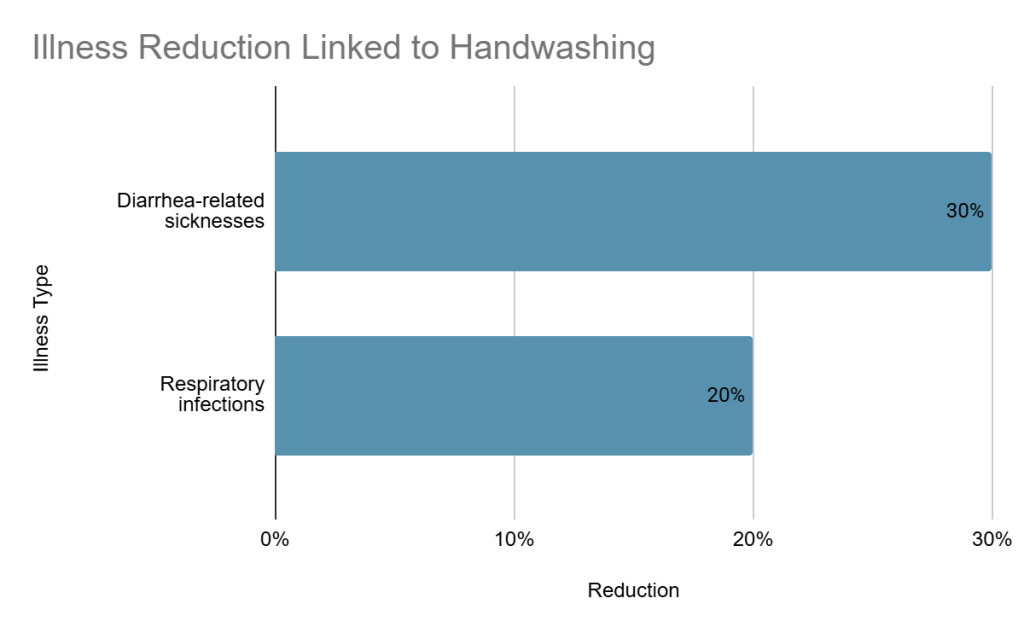
CDC data show that handwashing can prevent about 30% of diarrhea-related illnesses and about 20% of respiratory infections.
Practical Home Hygiene Takeaways
Handwashing is most effective when it happens at the right moments. The biggest opportunities are before food, after bathroom use, after coughing or sneezing, after handling trash, after caring for someone sick, and after cleaning dirty areas.
For home maintenance and household hygiene, the strongest pattern is simple:
- Wash your hands at high-risk moments.
- Clean high-touch surfaces regularly.
- Use soap and water when hands are dirty.
- Use sanitizer only when soap and water are not available.
- Teach children the same five steps repeatedly.
This page is intended as a homeowner-friendly summary of publicly available handwashing data. It is not medical advice.
Sources
- CDC – “Handwashing Facts” – https://www.cdc.gov/clean-hands/data-research/facts-stats/index.html
- CDC – “About Handwashing” – https://www.cdc.gov/clean-hands/about/index.html
- CDC – “Hand Sanitizer Guidelines and Recommendations” – https://www.cdc.gov/clean-hands/about/hand-sanitizer.html
- CDC – “When and How to Clean and Disinfect Your Home” – https://www.cdc.gov/hygiene/about/when-and-how-to-clean-and-disinfect-your-home.html
- CDC – “Hygiene and Respiratory Viruses Prevention” – https://www.cdc.gov/respiratory-viruses/prevention/hygiene.html
- UNICEF – “Hygiene and Hand Washing Statistics” – https://data.unicef.org/topic/water-and-sanitation/hygiene/
- WHO – “Hand Hygiene” – https://www.who.int/teams/integrated-health-services/infection-prevention-control/hand-hygiene
- WHO – “Water Supply, Sanitation and Hygiene Monitoring” – https://www.who.int/teams/environment-climate-change-and-health/water-sanitation-and-health/monitoring-and-evidence/wash-monitoring